
Many Christian apologists and missionaries have popularized this argument to counter the Muslim assertion that Jesus was historically a Muslim. They argue that the historical Jesus called God his “Father,” thereby disqualifying himself from being a Muslim, since the Qur’an states that Allah is not a father, nor does He have any sons.
Ontological VS Metaphorical Fatherhood/Sonship
What is meant by the Qur’anic verses that deny fatherhood or sonship? The context clues answer that question for us. Take, for example, Surah 112 (Al-Ikhlāṣ). Allah says that He does not “beget,” nor is He Himself “begotten.” This chapter of the Qur’an is a polemic against the Nicene confession, which is held dearly and universally by all mainstream Christian groups. Consider the following:
“We believe in one God,
the Father Almighty,
Maker of heaven and earth,
of all things visible and invisible.
And in one Lord Jesus Christ,
the only Son of God,
begotten from the Father before all ages,
God from God,
Light from Light,
true God from true God,
begotten, not made;
of equal substance as the Father.”
Now compare this confession with Chapter 112 of the Qur’an:
“In the name of God, the Gracious, the Merciful.
Say, ‘He is God, the One,
God, the Absolute.
He begets not, nor was He begotten.
And there is none equal to Him.’”
If you notice, the Nicene confession is directly refuted by the Qur’an. In the Nicene confession, God both begets and is also begotten; as a result, that which is begotten (the Son) is of equal substance to the Begetter (the Father). Surah Al-Ikhlāṣ, on the other hand, asserts that God is neither begotten nor does He beget, and hence there is nothing of equal substance to Him.
So what kind of begetting, sonship, and fatherhood is being addressed here? It is an ontological relation, not a mere metaphor. Allah denounces such blasphemy and slander against Him and His Messiah.
In fact, every denunciation of sonship in the Qur’an refers to ontological or divine sonship; whether in reference to Christians, Jews, or pagan Arabs! With the exception of one verse in Chapter 5 of the Qur’an.
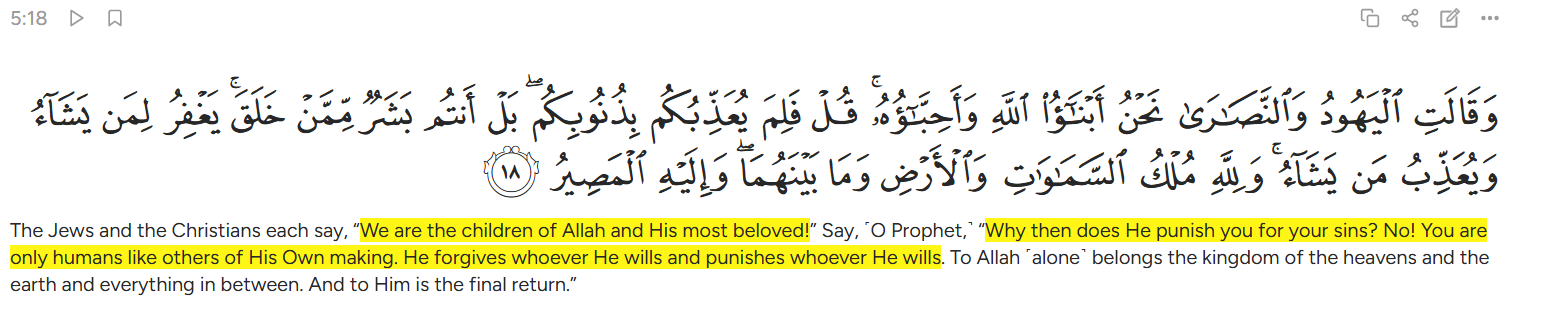
This passage is understood by some to be a reproach to the Christians and Jews for calling themselves “children of God,” and that is correct, but not because they merely used expressions such as “child of God” or “God is our Father.” Rather, it is because they distorted the true meaning of these conventions by taking them to imply that they were special creatures, elevated above other human beings, possessing a unique relationship with God such that He would favor them regardless of obedience.
What is the evidence for this? The verse itself states that they said they were the “children of Allah and His beloved ones.” Clearly, God is not rejecting the term “beloved” as inherently inappropriate for Him. Rather, the blameworthy element lies in the meaning they intended by calling themselves “His children and beloved ones.”
The following is the commentary of the famous exegete Ibn Kathir (1300–1373 CE):

Al Tabari (838-923CE) also mentions in his commentary the same view:
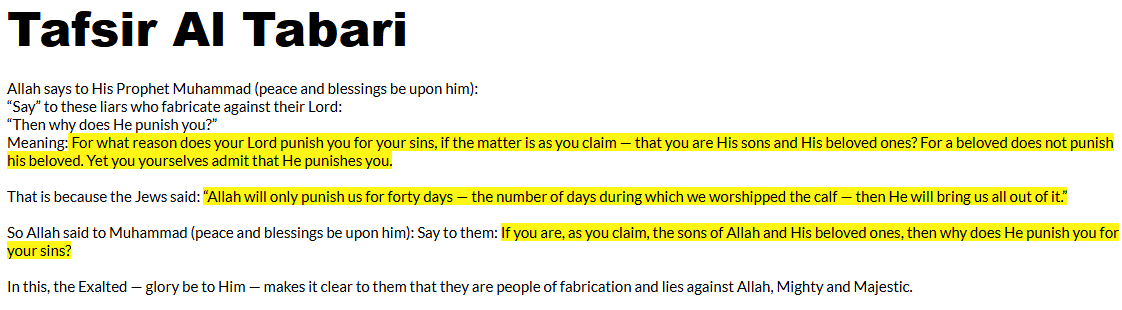
It is therefore clear that all of mankind are servants of Allah. They are rewarded for their obedience and punished for their disobedience. No one possesses any special favor beyond that.
It is in this sense that believers are described as “children of God.” As the Torah makes clear, one is only considered a child of God so long as one remains obedient and faithful. If one ceases to be obedient and faithful, one is cut off from that metaphor.
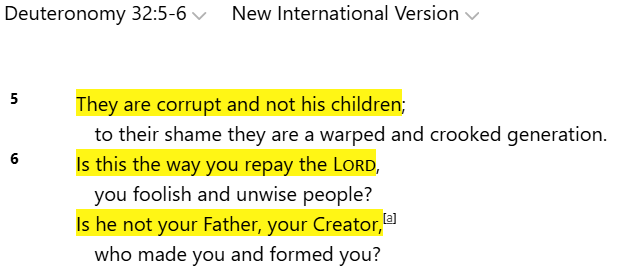
Therefore, a “child of God” is, in reality, an obedient servant of God, which is precisely what the Qur’an affirms:
“There is none in the heavens and the earth but that he will come to the Most Merciful as a servant.” (19:93)
Any other understanding of these terms is therefore rejected.
The orthodox methodological approach regarding terminology (alfādh) is that a term itself cannot be affirmed or negated independently of its intended meaning. Shaykh al-Islām Ibn Taymiyyah speaks explicitly about this very approach.
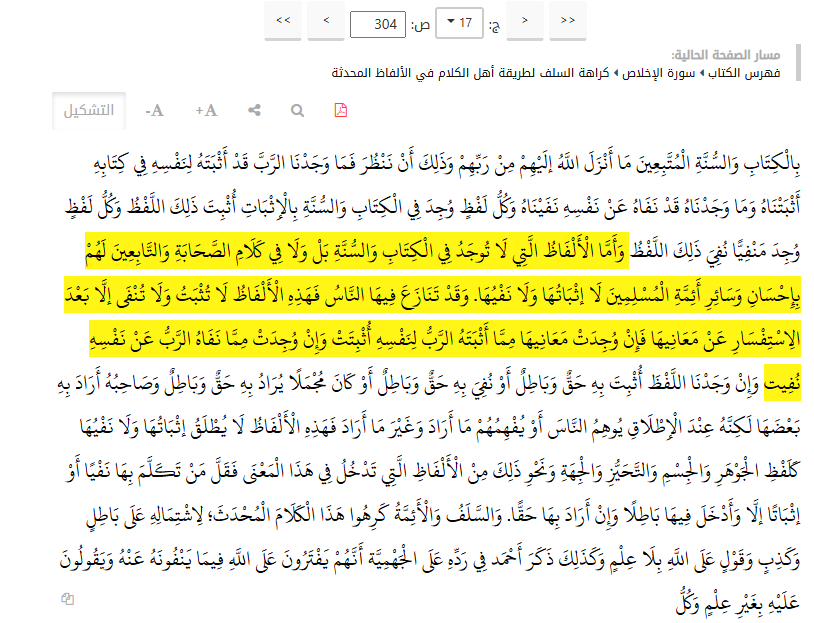
Translation:
“As for the terms that are not found in the Book and the Sunnah — nor even in the speech of the Companions, the Followers who followed them in excellence, and the rest of the Imams of the Muslims — neither affirming them nor negating them:
And people have disputed regarding them. Such terms are neither affirmed nor denied except after inquiring into their meanings.
If their meanings are found to be among what the Lord has affirmed for Himself, they are affirmed. And if they are found to be among what the Lord has negated from Himself, they are negated.” (Majmu’ Al Fatawa, Volume 17, pg.304)
He also mentions a dispute about the term “Jism” (Body) wether this can be affirmed for Allah or not, and he follows this exact methodology.
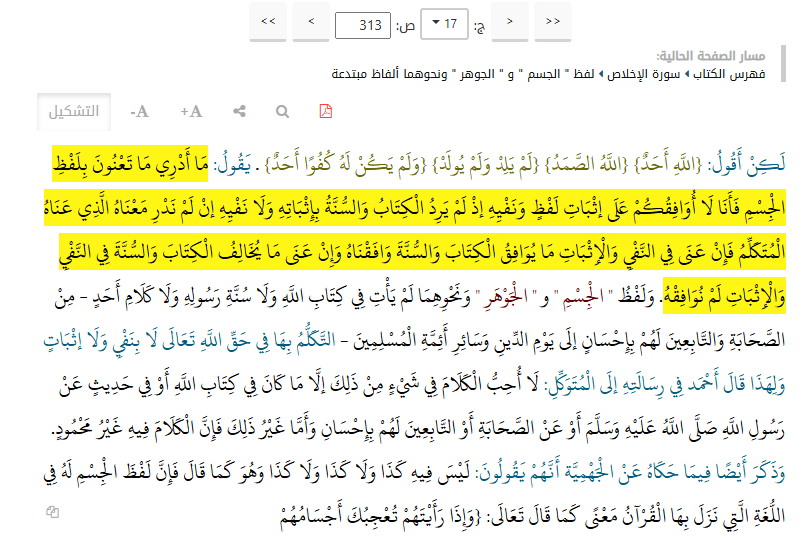
Translation:
“I do not know what you mean by the term “body” (jism). So I do not agree with you in affirming it nor in denying it, since the Book and the Sunnah have not come with affirming it nor denying it — if we do not know the meaning intended by the speaker.
If, in negation or affirmation, he intends a meaning that accords with the Book and the Sunnah, then we agree with him. But if he intends a meaning in negation or affirmation that contradicts the Book and the Sunnah, then we do not agree with him.”
So, Is Allah a father?
Therefore, we have established our clear methodology regarding this matter. We can now proceed to answer the question: “Is Allah a father?”
We reply: We do not know what you mean by “father.” If you mean that Allah is the Creator of all things, their Originator and Sustainer, and that He is compassionate toward the believers, then we agree with you. But if you intend a meaning negated by the Book of Allah and the Sunnah of His Messenger, such as Allah being an ontological father with a divine son, or that certain groups are favored independently of their obedience, then we do not agree with you.
However, this clarification is only for the sake of engaging those who dispute this issue. Orthodox Sunni Islam is clear that we do not employ terms that are not affirmed by the Qur’an or by the speech of the Prophet ﷺ. Nevertheless, for the purpose of clarification in debate, such terminology may be conditionally accepted — so long as the intended meaning is sound and correct.
Did Jesus & Other Prophets Call Allah Father?
It is reported by Christians and Jews, as well as by several ancient sources, that Jesus and other prophets used this terminology when addressing God, though it was not something common.
Our methodology is that we neither affirm nor negate matters that are not reported in the Qur’an, the Sunnah, or from the Companions, because reports relating to previous revelations are not authenticated through a reliable chain of transmission (isnād).
However, in my personal assessment, based on the available historical data, it is highly plausible that Jesus did refer to God as “Father.” This is, in fact, the consensus view among critical scholars.
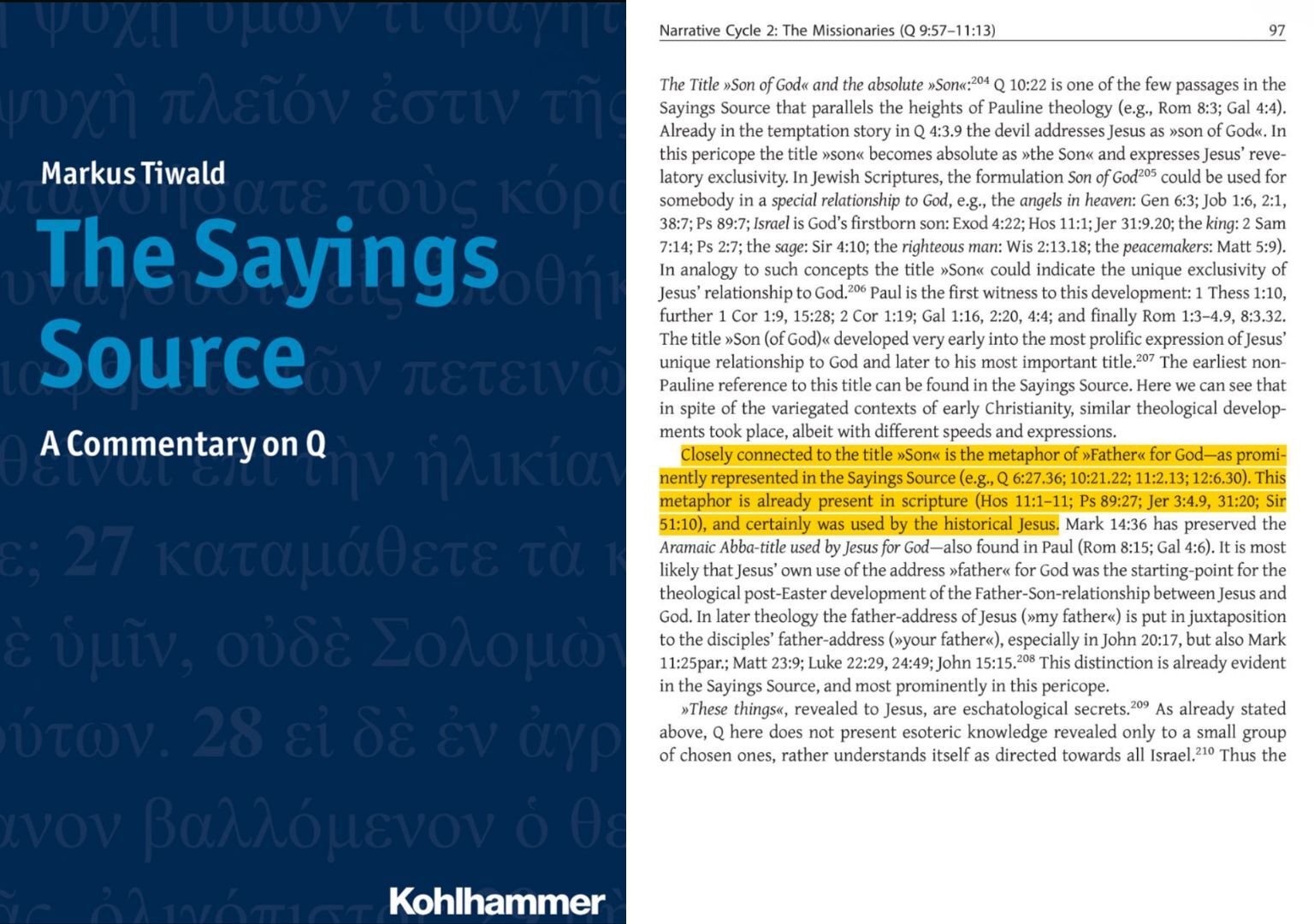
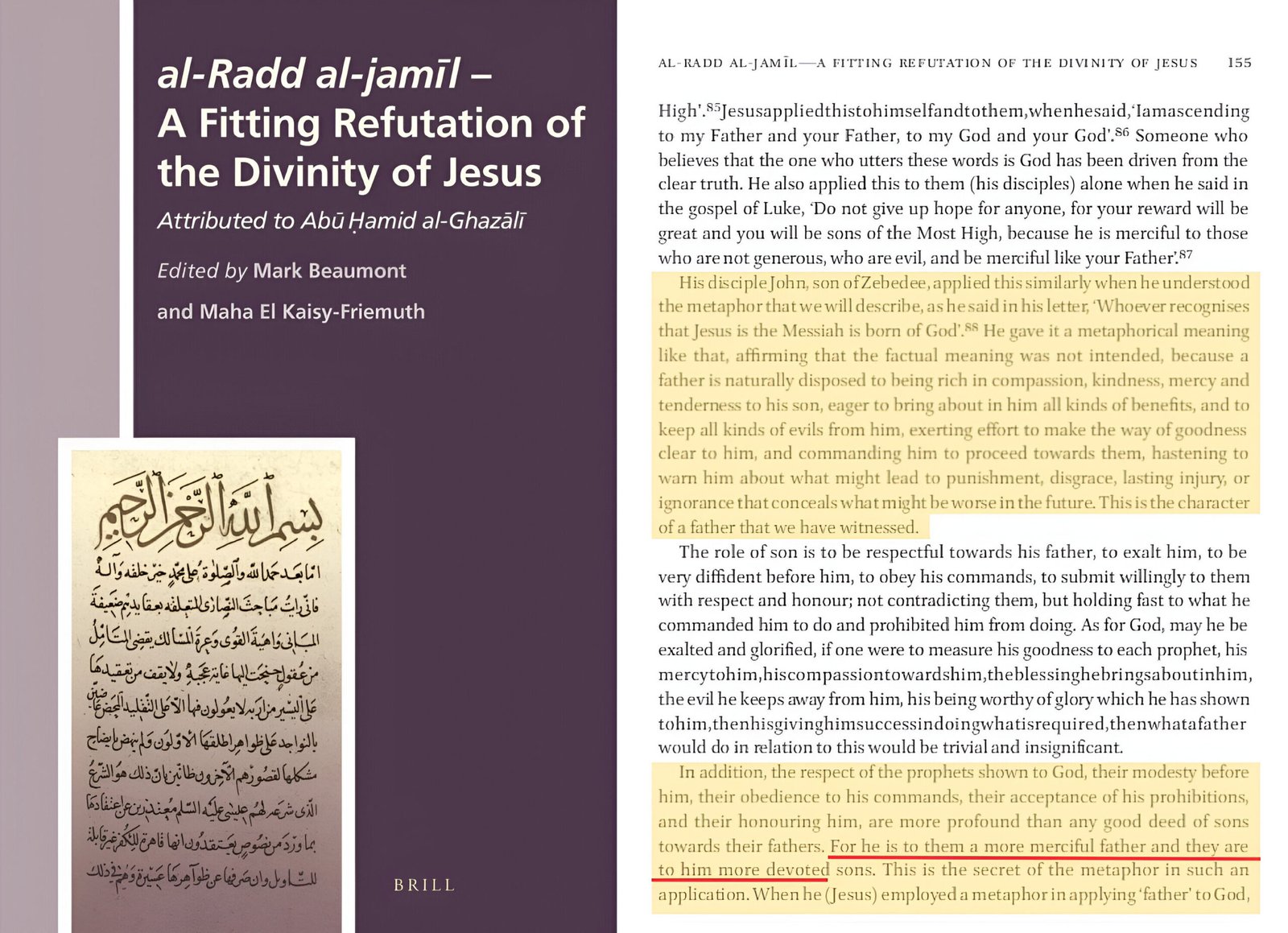
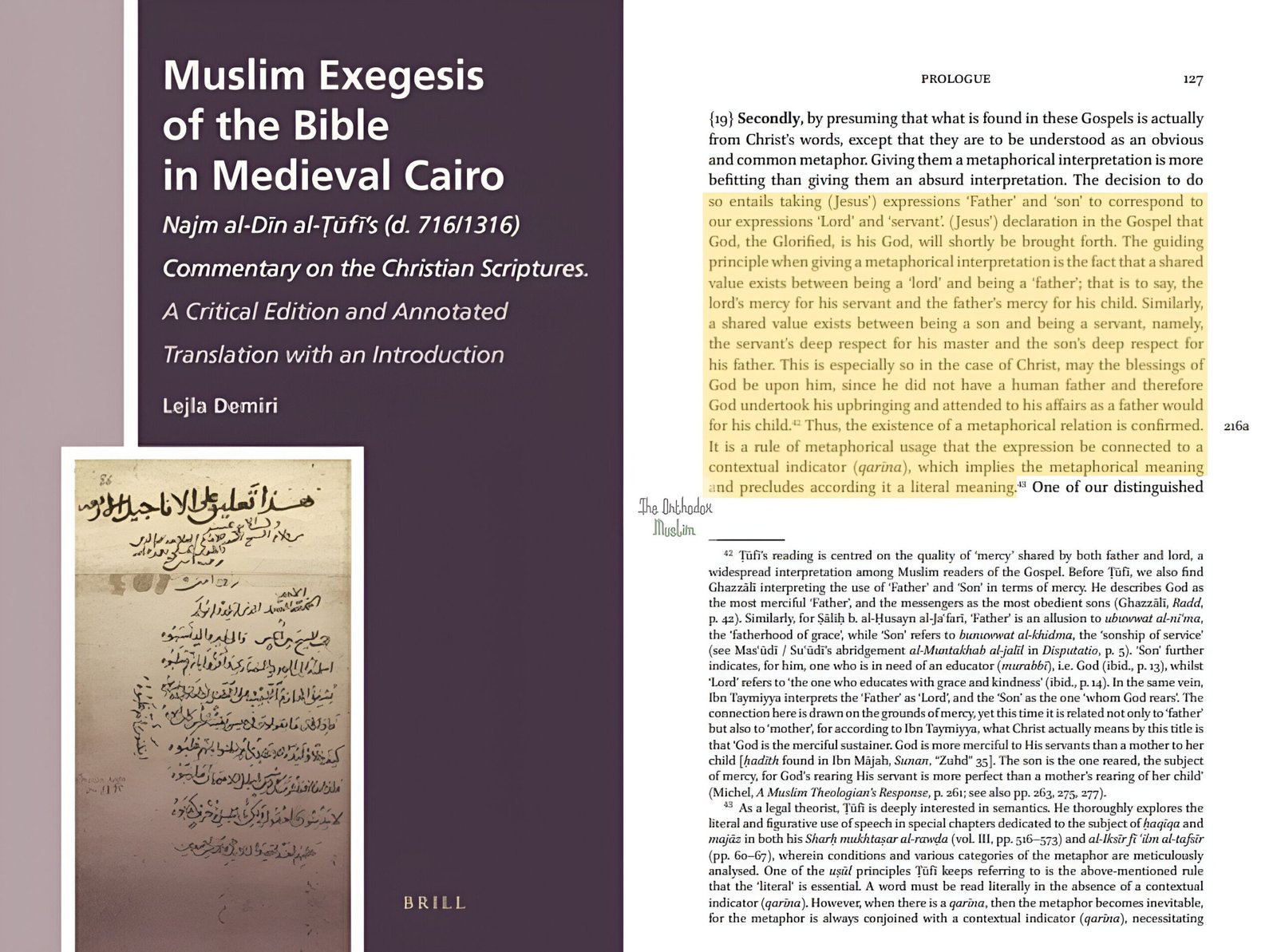
Given the overwhelming evidence, even if Jesus did call God “Father,” this would not pose a problem, since the intended meaning would have been sound, as many classical orthodox scholars have noted.
Consider the following:
Ibn Taymiyah:
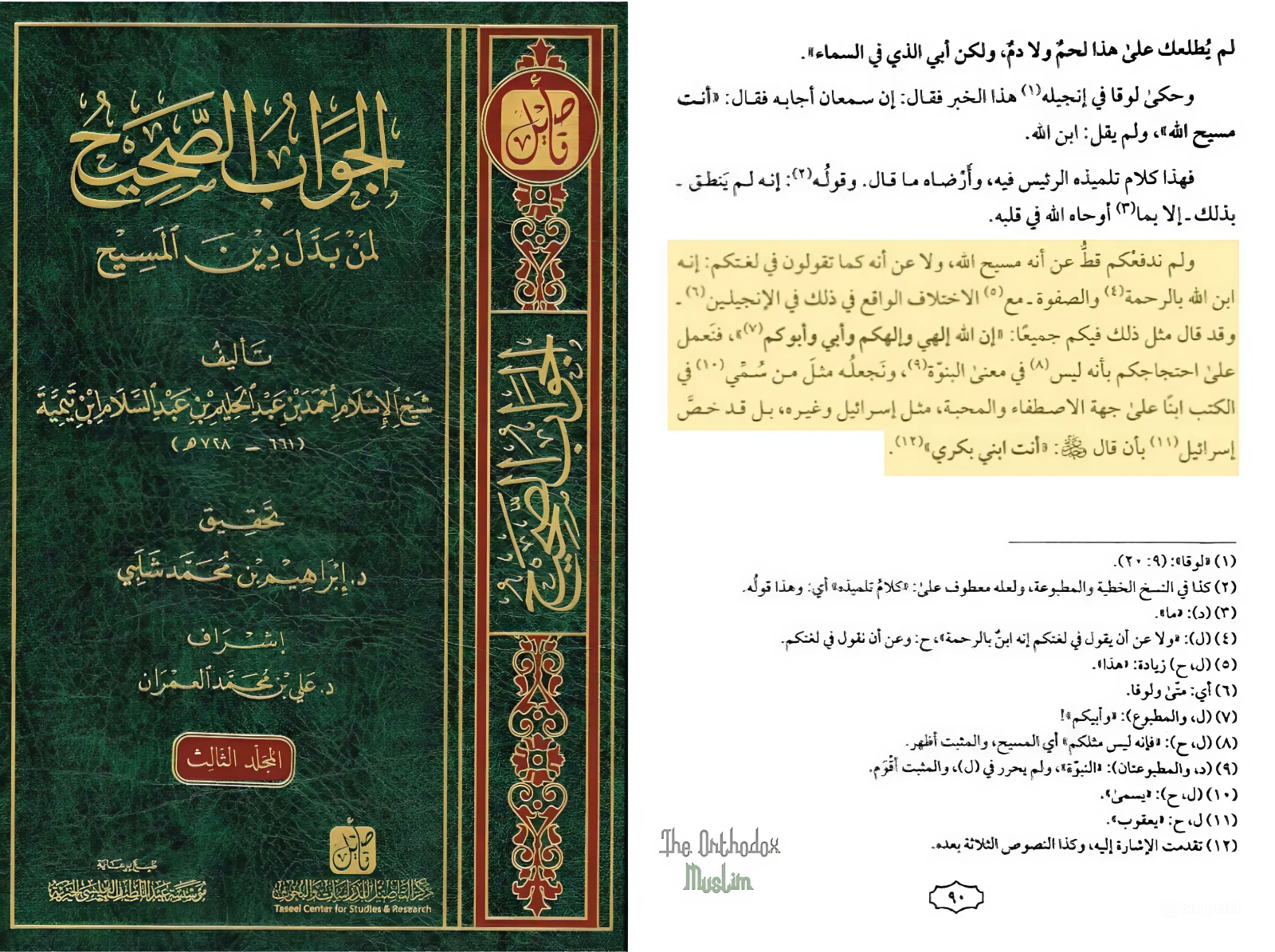
Translation:
“We do not dispute with you regarding the fact that he is the Messiah of Allah. Nor do we dispute with you in what you say about him in your language — that he is the son of Allah in the sense of mercy and closeness” (Al Jawab Al Sahih, Volume 3, pg.90)
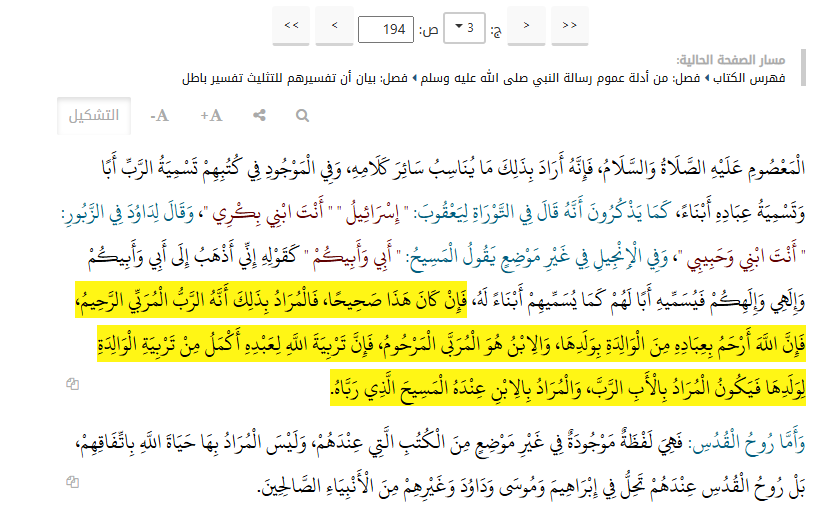
Translation:
“If this statement attributed to the Messiah — the infallible one (peace be upon him) — is authentic, then he must have meant by it something that aligns with the rest of his speech. In the existing texts of their books, we find that God is called ‘Father’ and His servants are called ‘sons.’ For example, they mention that He said in the Torah to Jacob: ‘Israel, you are My firstborn son,’ and He said to David in the Psalms: ‘You are My son, My beloved.’ And in multiple places in the Gospel, the Messiah says: ‘My Father and your Father,’ such as when he says: ‘I am ascending to My Father and your Father, and to My God and your God.’ So, he refers to God as ‘Father’ to them just as he calls them ‘sons’ to Him. If this is accurate, then what is meant by it is that He (God) is the nurturing, merciful Lord — for Allah is more merciful to His servants than a mother is to her child — and the ‘son’ is the one being nurtured and shown mercy. Indeed, God’s nurturing of His servant is more perfect than the nurturing of a mother to her child. So, the intended meaning of ‘Father’ is ‘Lord,’ and the intended meaning of ‘son’ according to the Messiah is ‘the one nurtured by Him.'” (Al-Jawāb al-Ṣaḥīḥ, vol. 3, pg. 193)
Al-Ghazali
Al-Tufi
Alhamdulillah keep it coming!
In short Islamic theology evaluates words by meaning, not by sound.
وفقكم الله لما يحب ويرضى
This is so great. I’ve been really wanting some content that is easy to reference like this. BarakAllahu Feek
Barak Allah feekum
This is a common claim I hear when doing dawah online and it’s starting to spread to the streets . Thank you for providing enough evidence to put this claim to sleep and allow us to move on to more important issues in dawah . Jazakallahukara
MashaAllah I learnt something today Alhamdillah
Great information akhi… May Allah bless you
May Allah Reward you.