
Isaiah 53 is CLEARLY about Israel! The passage itself tells you
Christian missionaries and apologists treat Isaiah 53 like a slam-dunk, and to be honest, I understand why, as it is the best shot they have to prove Jesus fulfilled ANY messianic prophecy in context. The problem is that If you start Isaiah 53 in the middle and read it like a standalone poem, you can make it sound like almost anything. But Isaiah didn’t write it in isolation. It sits inside Isaiah 40–55 (often called “Second Isaiah”), a section focused on Israel in exile and Israel’s restoration in front of the nations.
In order to know who the suffering servant is, you must be familiar with Isaiah’s context.
1) The context is Israel coming out of exile
Isaiah 40–55 is packed with comfort language (“fear not,” “I redeem you”), exile language, and restoration language. It’s addressing Jacob/Israel as a people under judgment, then brought back, vindicated, and displayed before the world.
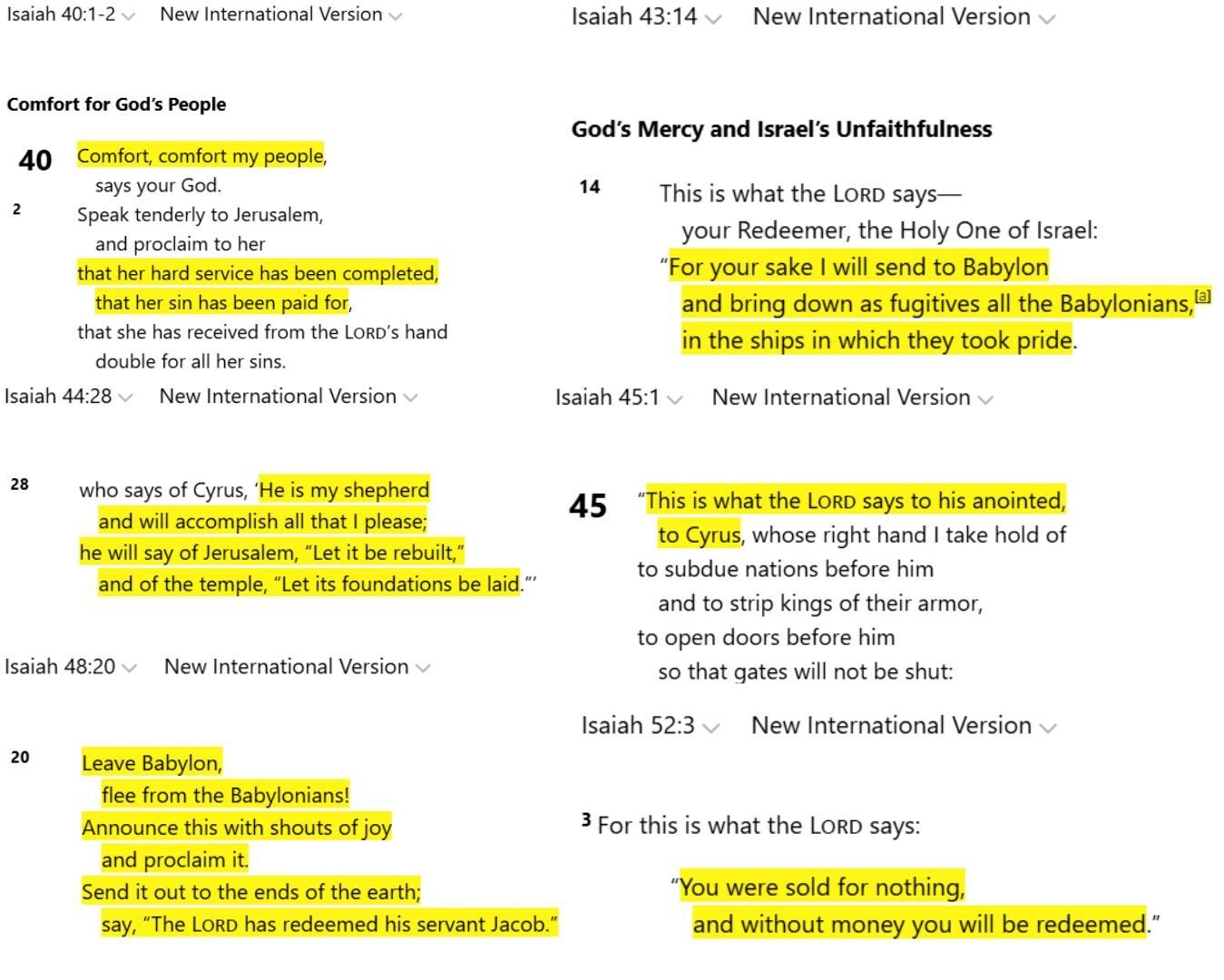
That matters because the “servant” isn’t introduced in Isaiah 53. The servant is already a major character in this whole section! as a matter of fact we are specifically TOLD who the servant is over and over again! it’s almost as if the author of Second Isaiah knew about missionaries that would come later and strip the chapter out of context.
2) The servant is explicitly identified as Israel (over and over)
You don’t have to guess who the servant is when the text flat-out names him:
-
Isaiah 41:8–9 — “But you, Israel, my servant… Jacob whom I have chosen…”
-
Isaiah 43:10 — “You are my witnesses (plural)… and my servant (singular) whom I have chosen…”
-
Isaiah 44:1, 44:21 — “O Jacob my servant… Israel…”
-
Isaiah 45:4 — “For the sake of Jacob my servant, and Israel my chosen…”
-
Isaiah 48:20 — “YHWH has redeemed his servant Jacob.”
-
Isaiah 49:3 — “You are my servant, Israel, in whom I will display my splendor.”
It literally cannot get clearer than this, there is no room to misidentify the servant, it is none other than Israel.
3) Isaiah 52 sets up the speakers: the nations and kings
Many people don’t know that the suffering servant section starts in Isaiah 52:13, NOT in Isaiah 53:1.
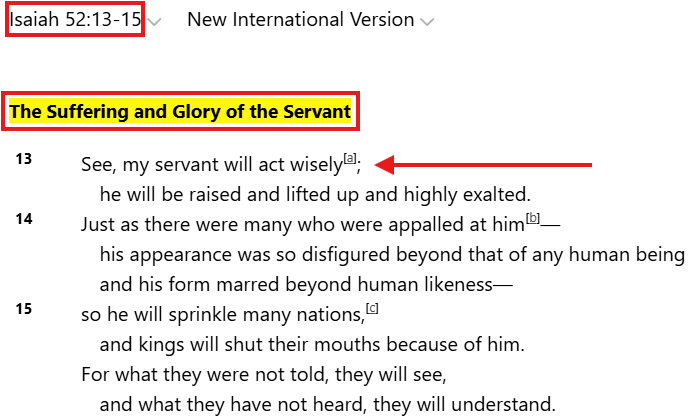
Here, Isaiah starts describing the suffering servant, who till this point, is assumed to be Israel, because there is no good reason to assume this is anybody other than the same servant described throughout Second Isaiah.
God Will Lay Bare His Holy Arm ?
-
God will “lay bare his holy arm” in the sight of all nations (Isaiah 52:10).
That “holy arm” language isn’t random. In the Torah, God “bares his arm” when he steps in publicly to save his people.
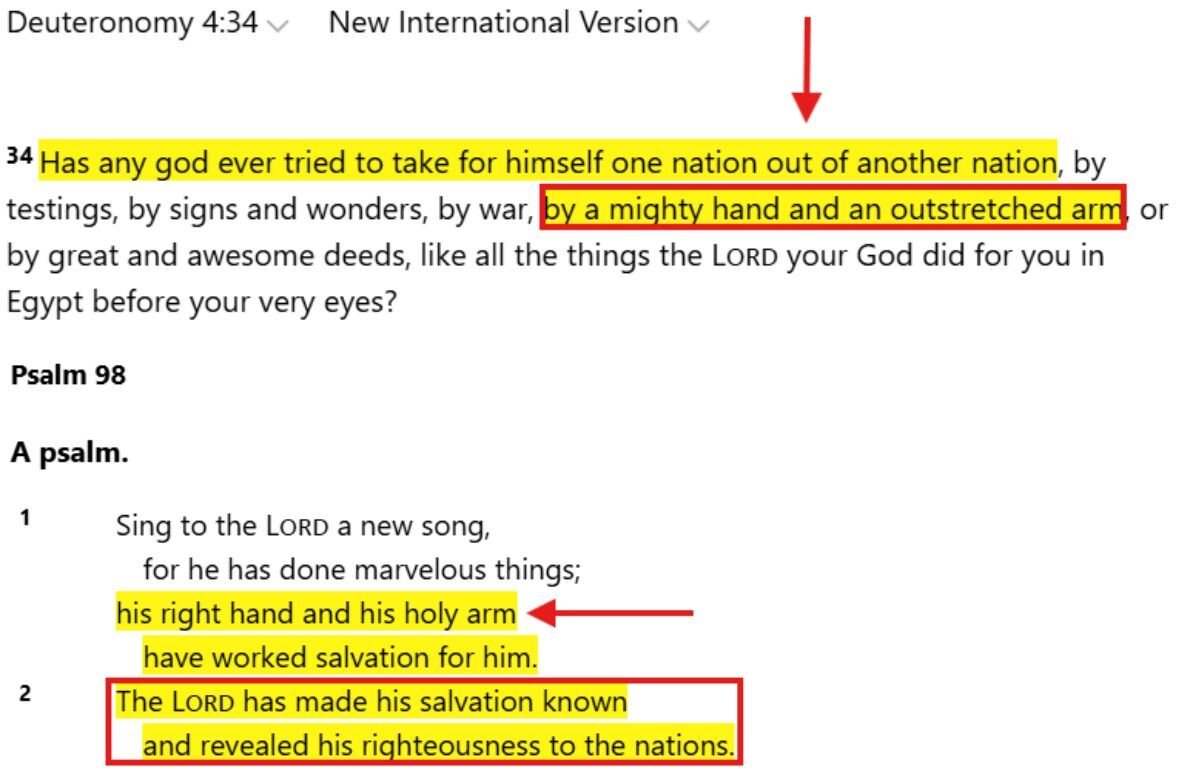
Now keeping this in mind, when Isaiah 52:10 says God will lay bare his holy arm in sight of all nations, it means that God will save his servant (Israel) out of exile in the sigh of all nations. This is why the text continues to say in verse 15
“so he will sprinkle many nations, and kings will shut their mouths because of him. For what they were not told, they will see, and what they have not heard, they will hear.”
Now notice the flow:
-
Isaiah 52:15: the nations/kings will see what they hadn’t seen and hear what they hadn’t heard.
-
Isaiah 53:1 immediately sounds like a response to that shock: “Who has believed what we heard? and to whom has the arm of the lord been revealed” (same “heard/seen” theme).
Obviously the answer to the question posed in Isaiah 53:1 by the speaker are the kings of nations are now seeing and hearing. This is vital to understand who the speaker is in Isaiah 53, it starts off by the kings seeing what they did not expect, and hearing what they did not expect to hear.
4) Every single verse in the suffering servant section applies to Israel elsewhere! (and especially the righteous remnant)
Verse 1-3
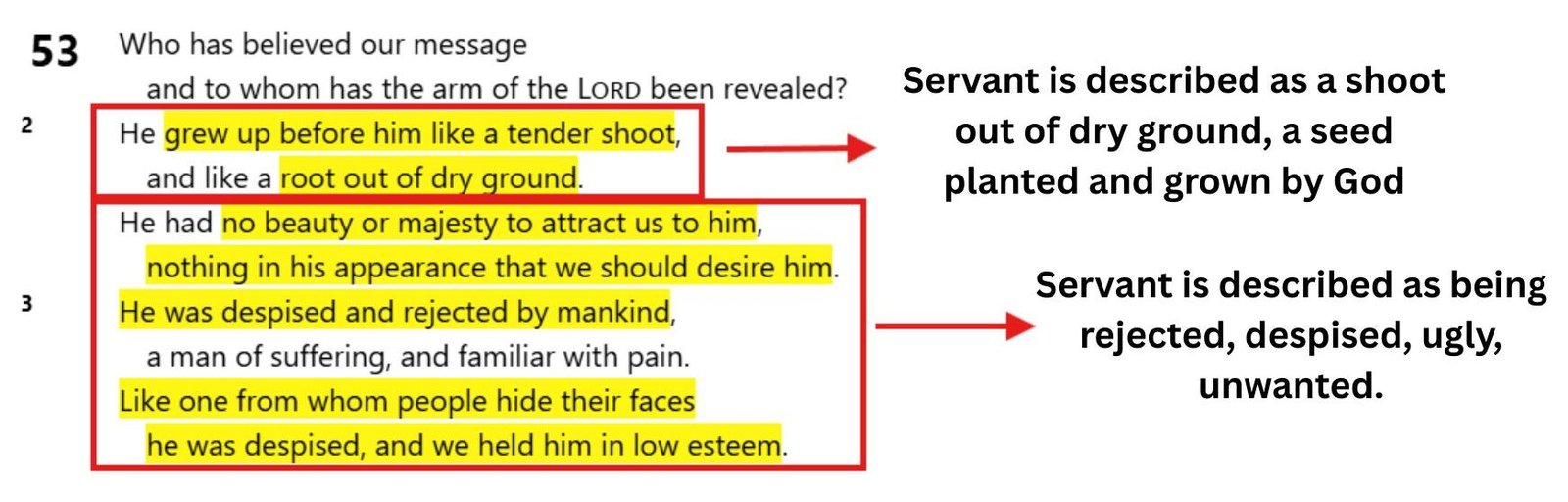
Two main descriptions here as seen above in the diagram, a servant who is described as a shoot planted and grown out of dry ground, and the servant being rejected, despised, and unwanted. Does this fit Israel? Yes! The Tanakh explicitly gives those exact descriptions to Israel.
Isaiah 60:21 “Then all your people will be righteous and they will possess the land forever. They are the shoot I have planted, the work of my hands, for the display of my splendor.”
Psalm 80:8-9 “You brought a vine out of Egypt; you drove out the nations and planted it. You cleared the ground for it; it took deep root and filled the land.”
Lamentations 1:8-9 “Jerusalem has sinned greatly and so has become unclean. All who honored her despise her, for they have all seen her naked“
Ezekiel 16:4-6 “On the day you were born your cord was not cut, nor were you washed with water to make you clean, nor were you rubbed with salt or wrapped in cloths. No one looked on you with pity or had compassion enough to do any of these things for you. Rather, you were thrown out into the open field, for on the day you were born you were despised.”
Lamentations 3:45 “You have made us scum and refuse among the nations.”
Clearly, these passages clearly show Israel as a plant planted by God, despised, rejected, hated by the nations just as the servant of Isaiah 53 is! So far, there’s no reason to think this is about anybody other than Israel.
Verse 4-6
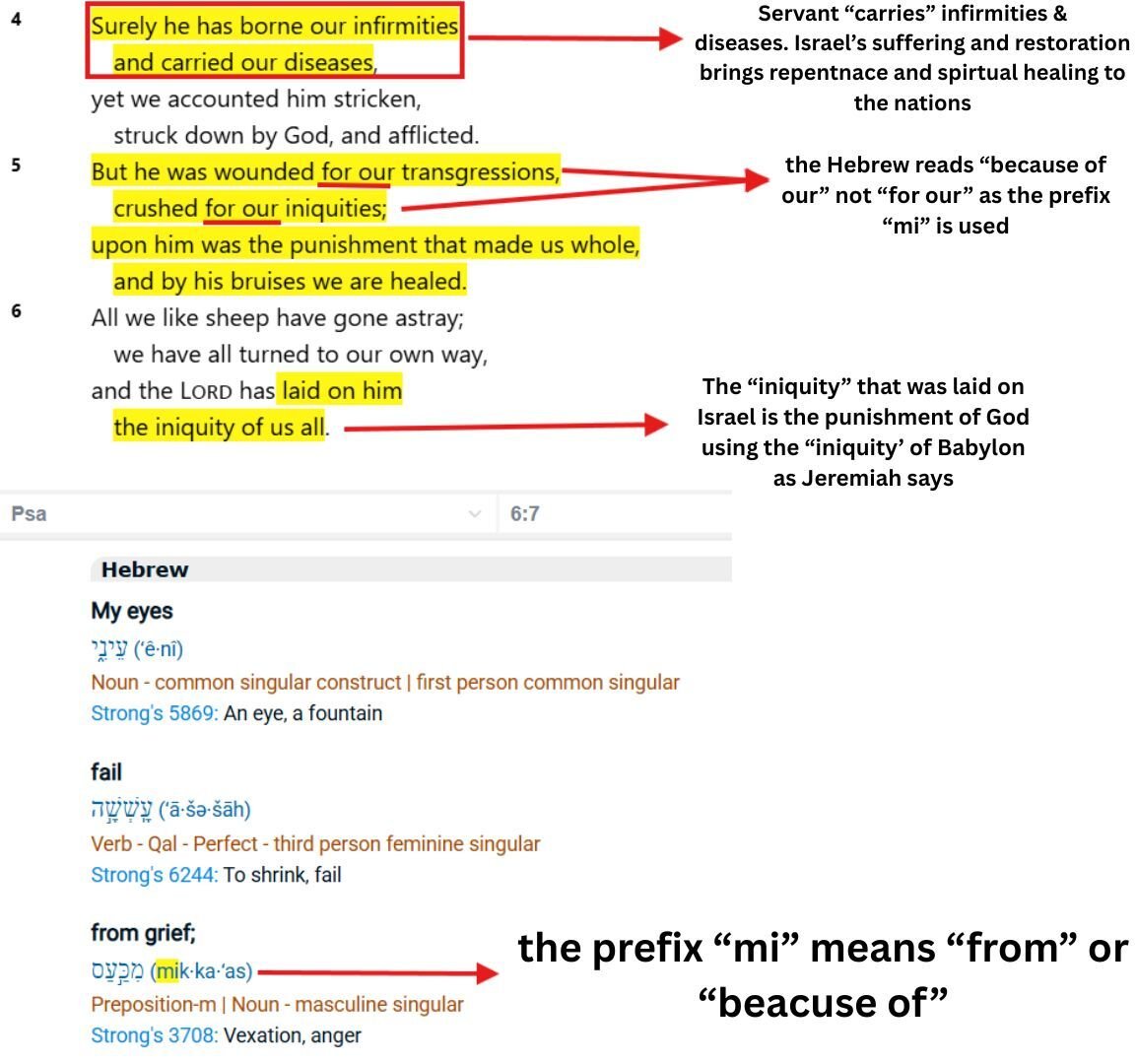
Here’s where it gets a little tricky, this whole “for our iniquities” language sounds familiar to a Christian, as they believe Jesus was a literal substitutionary atonement for sins, but that is not what the author of Isaiah has in mind, as the diagram above shows, the Hebrew doesn’t even say “for our” rather it uses the prefix “mi” which means “from” or “because of”. the Tanakh tells us over and over that through the suffering and exaltation of Israel, the nations will repent and turn to the true God, therefore it is because of Israel that the nations are spiritually healed of their diseases. Consider the following passages:
Ezekiel 36:23
“I will show the holiness of my great name, which has been profaned among the nations, the name you have profaned among them. Then the nations will know that I am the LORD, declares the Sovereign LORD, when I am proved holy through you before their eyes.”
Isaiah 45
“shall come over to you and be yours; they shall follow you; they shall come over in chains and bow down to you They will make supplication to you, saying, “God is with you alone, and there is no other;”
Hosea 5:15
“I will return again to My place, until they acknowledge their guilt and seek My face; in their affliction they will earnestly seek Me.”
Isaiah 29:6
“My soul yearns for you in the night; in the morning my spirit longs for you. When your judgments come upon the earth, the people of the world learn righteousness.”
Jeremiah 25
“Behold, I will summon all the families of the north, declares the LORD, and I will send for My servant Nebuchadnezzar king of Babylon, whom I will bring against this land, against its residents, and against all the surrounding nations. So I will devote them to destruction and make them an object of horror and contempt, an everlasting desolation…..But when seventy years are complete, I will punish the king of Babylon and that nation, the land of the Chaldeans, for their iniquity, declares the LORD, and I will make it an everlasting desolation.
So what can we conclude from verses 4-6? God uses the iniquities of the nations to bring judgement and punishment to Israel, when Israel is punished and the righteous remnant preservers and repents to God, God uses Israel as a means to bless the nations and bring them to repentance.
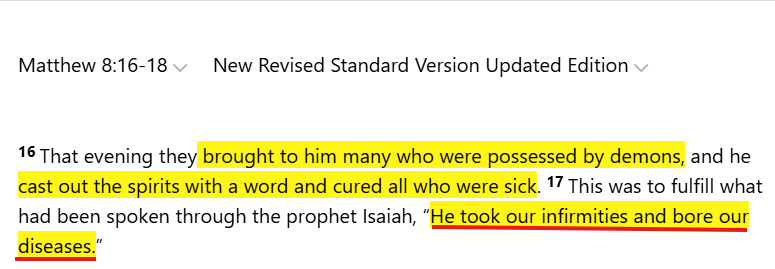
Another interesting point to mention is that the Gospel of Matthew uses verse 4-6 not to refer to substitutionary atonement, but to Jesus’s physical healing miracles!
Now, just to show this language of “taking on someone’s iniquities” being used in the Tanakh without implying any taking someone else’s sins and becoming guiltless. In Lamentations 5:7, the author speaking about the exile says that the righteous remnant are bearing their fathers sins and iniquities! But obviously this doesn’t imply that they literally took their moral guilt of their fathers while their fathers became guiltless. All it’s saying is that because their father sinned against God, they are facing the consequence of God’s punishment together with them.

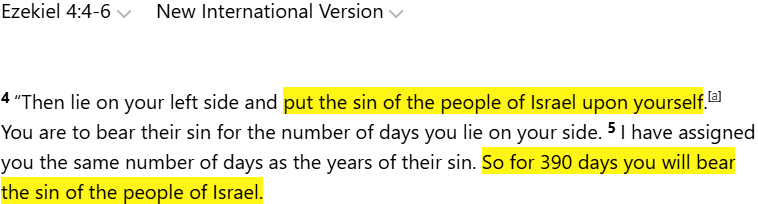
Also, Ezekiel is said to “bear the sins” of Israel! Ezekiel definitely didn’t die for anyone’s sins, rather this was a symbolic gesture to represent Israel’s punishment.
Verse 7
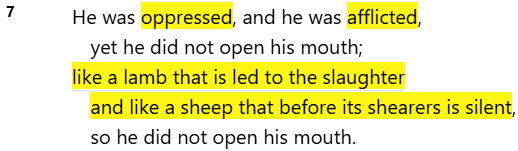
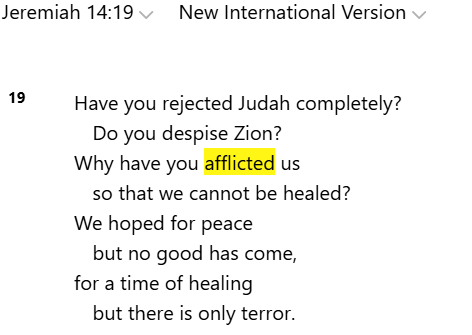
This verses describes the servant as “oppressed” and “afflicted” which is exactly what the Tanakh says about Israel in exile! a prime example of this is Jeremiah 14:19 where Israel is described as “afflicted”, as well as the very chapter before Isaiah 53 explicitly describes Israel as “oppressed”.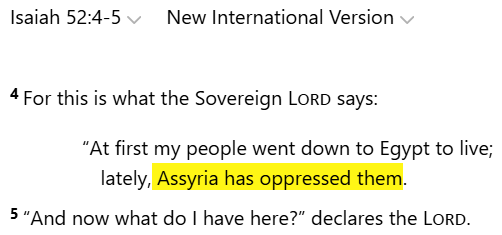
Verse 7 also describes righteous Israel as a “lamb led to the slaughter” & a “sheep” silent before its shearers, low and behold, that is the exact description we get of Israel in exile! for example in Jeremiah 11:19 says:
“I was like a gentle lamb led to the slaughter; I did not know they had plotted against me.”
Jeremiah is a perfect example of righteous Israel in exile, which fits the general theme of the “suffering” servant perfectly. We also have Israel being described as “sheep” while in exile in the book of Psalms, consider the following passages:
Psalm 44:22 “Yet for Your sake we are killed all day long; we are regarded as sheep to be slaughtered.”
Psalm 44:11 “You gave us up to be devoured like sheep and have scattered us among the nations.”
As clear as day!!! So far. all the descriptions of the suffering servant match Israel, thus we have no reason to think this is about a future dying-rising-savior-mythological-man-god.
Verse 8 & 9
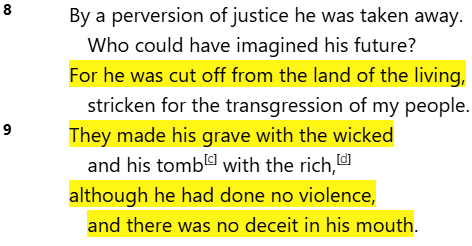
The servant is “cut off” from the land of the living here in this verse, which could be understood in two ways.
- Literal death, Israel is killed, martyred and oppressed while in exile.
- They are exiled, being cut off from the land of the living in the book of Ezekiel is symbolic for Israel being outside of it’s promised land, where the land of the living is “Jerusalem” and the “real of the dead” is exile. Please see Ezekiel 37 for this!
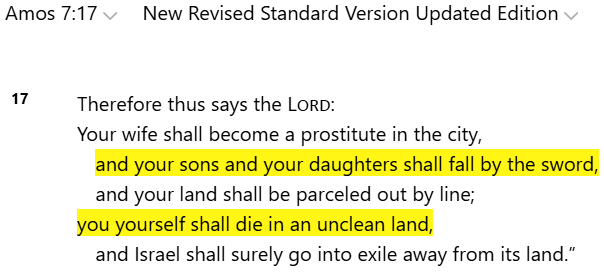
As for verse 9, there is a clear parallelism happening, grave = death, rich = wicked. The rich all over the Tanakh are seen as wicked, which is why the parallelism makes sense. The idea is that Israel will be killed and buried outside of their land amongst sinners & gentiles! For example, Amaziah the priest is told by the prophet Amos that he will be taken into exile, his children will be killed, and that he himself will die in an “unclean” land,
What is happening here in this verse is very interesting, the servant is contrasted with the wicked or the rich, the servant is said to have no deceit in his mouth, which is the opposite of what Tanakh says about the wicked and the rich.
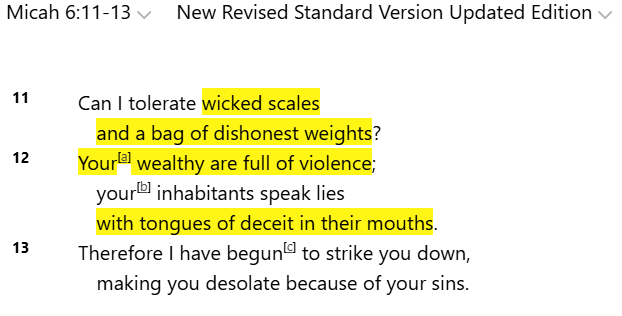
So in summary, this verse contrasts the deceitful wicked/rich with poor/righteous Israel that has no deceit in it’s mouth! The missionary here will say something like “Well Israel has a history of deceit! It can’t be Israel” This is quite ironic because the Tanakh quite literally describes righteous Israel having NO deceit in it’s mouth.
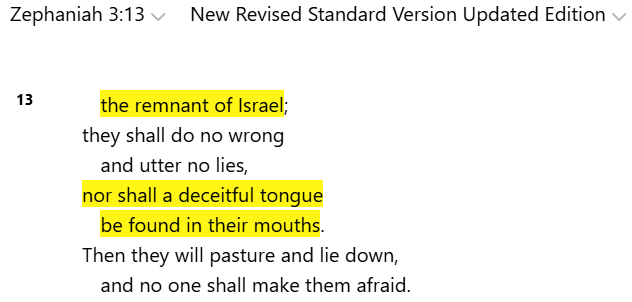
You see how perfectly this all fits together? There is NO doubt that the servant is none other than Israel.
Verse 10 & 11
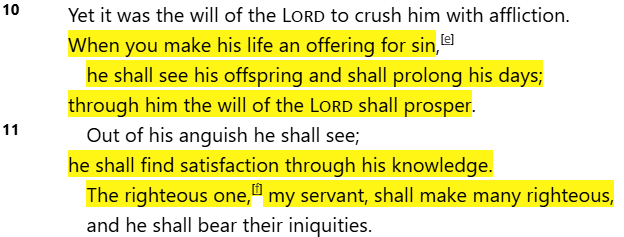
These couple passages say that the life of the servant is made an “offering” for sin, missionaries think this is the big mic drop! Hallelujah! It’s talking about Jesus,
Well, that couldn’t be further from the truth! as it turns out, the book of Maccabees during the persecution of the Jews by the Greeks describes the death of righteous Jews as a sin offering for the nation! Consider the following passages:
4 Maccabees 17
“These, then, who have been consecrated for the sake of God are honored not only with this honor but also by the fact that because of them our enemies did not rule over our nation, 21 the tyrant was punished, and the homeland purified—they having become, as it were, a ransom for the sin of our nation. 22 And through the blood of those pious ones and their death as an atoning sacrifice, divine Providence preserved Israel that previously had been mistreated.”
2 Maccabees 6:26
“If I dissemble to gain a brief moment of life, they would be led astray by me, while I would bring defilement and dishonor to my old age. 26 Even if, for the time being, I avoid human punishment, I shall never, whether alive or dead, escape the hand of the Almighty. 27 Therefore, by bravely giving up life now, I will prove myself worthy of my old age, 28 and I will leave to the young a noble example of how to die willingly and nobly for the revered and holy laws.”
Very CLEAR! When the righteous pass away, they cause the nation to repentance and righteousness. In this way, they are a blood sacrifice for the nation.
Then the passage says that God will prolong the days of his servant, this is such an amazing passage because that is EXACTLY what God promises Israel in the same book of Isaiah! Check it out:
Isaiah 65:20–22
“No more shall there be in it an infant who lives but a few days or an old person who does not live out a lifetime, for one who dies at a hundred years will be considered a youth, and one who falls short of a hundred will be considered accursed.21 They shall build houses and inhabit them; they shall plant vineyards and eat their fruit. 22 They shall not build and another inhabit; they shall not plant and another eat, for like the days of a tree shall the days of my people be, and my chosen shall long enjoy the work of their hands.”
Verse 11 says that the righteous servant will lead others to righteousness, unsurprisingly that is exactly what the righteous are described as doing! For example, Daniel says the following:
Daniel 12:3 “Those who are wise will shine like the brightness of the heavens, and those who lead many to righteousness, like the stars for ever and ever.”
Daniel 11:33 “Those who are wise among the people shall instruct many, though for a time they shall fall by sword and flame, by captivity and plunder.”
So those righteous who are oppressed in exile will lead people to righteousness. Very simple & easy! No need for man-god-savior. The passage also says that through the servant, the will of LORD will prosper. Which is precisely what God says will happen through Israel.
Ezekiel 36:23 “I will sanctify my great name, which has been profaned among the nations and which you have profaned among them, and the nations shall know that I am the Lord, says the Lord God, when through you I display my holiness before their eyes”
We therefore conclude that Isaiah 53 is about NONE other than Israel, and we have no reason to think it’s about anyone else.
💙🫂
Great article! It’s worth mentioning that Matthew’s Gospel actually QUOTES Isaiah 53–yet resembles NOTHING of the interpretation modern Christians have! We read:
“And when Jesus entered Peter’s house, he saw his mother-in-law lying sick with a fever. He touched her hand, and the fever left her, and she rose and began to serve him. That evening they brought to him many who were oppressed by demons, and he cast out the spirits with a word and healed all who were sick. This was to FULFILL what was spoken by the Prophet Isaiah: “He took our illnesses and bore our diseases.” — Matthew 8:14-17 (ESV)
This was the PERFECT opportunity to apply Isaiah 53 as a prophecy of Christ’s crucifixion & sacrificial atonement, yet instead the Gospel author takes it LITERALLY to mean physical illness & disease—which not only undercuts the Pauline understanding, but also agrees perfectly with Islam (as we too believe Jesus came as a miracle-healer by God’s authority).
سلام عليكم و الحمد لله رب العالمين
He quoted this brother, for verses 4-6 section
بارك الله فيك والحمد لله رب العالمين والصلاة والسلام على رسول الله محمد وعلى آله وأصحابه أجمعين
Allahumma barik brother
Great Masha Allah
This article is excellent. It should be part of a series called “Revealing the true meanings of the Holy Bible”
You should collaborate with Abu Zakariya.
I can’t wait for that book!
May Allah increase u in knowledge, keep u longer and make u of greater benefit to the ummah together with other brothers
We have reason to believe Jesus is the Messiah [the Qur’an].
Christians have no good reason to believe Jesus was the Messiah. The “evidences” they give are wanting.
So if they want a strong foundation for that belief, they should probably be Muslim.
debate me, vadrian_ is my discord
W Libyano. This website looks very neat! I’m glad you’re doing something like this it’s very beneficial. May Allah reward you and your efforts.
Bro best response, keep it up
Since libyano has appeared he has changes alot in apologetic’s اللهم بارك
Great
My Allah bless you for your efforts and dedication my brother
May allah bless you
This is an excellent work. Keep it up. May Allah increase you in knowledge. Ameen
We love you brother ❤️
Great article
May ALLAH bless you
Please keep these going, akhi they’re actually so good and easy to track!!!
Love you my brother 🫂
I have been watching a lot of your videos, brother. I’m learning a lot of things even though I was born Muslim in a very Catholic country called the Philippines.
W big Lib
Big W big Lib
Great article akhi,keep on dismantling the arguments of these polytheists especially doglogic and inspiring theology
MashaAllah, Good work Brother!
PLEASE Always REMEMBER that you are doing it only for Allah and only with Allah’ permission he could have used someone else.
Wow W
تالله قفلت عليهم من كل الجهات
اي نصراني يظن ان النصوص ذي تتحدث عن جييصوص بعد ذي المقالة بيثبت انه مكابر و تيس أجرب مع عدم احترامي
Mashallah Tabarak ❤️
الله يثبتك و يرضي عنك و يهديك و يعلمك الحكمة و فصل الخطاب
الله يثبتك و يرضي عنك و يهديك
و يعلمك الحكمة و فصل الخطاب
Barakallahu feek ✌️
Amazing work as always brother Libyano, please make new blog posts too for example with the Uzayr argument